


Why Clicks Alone Won’t Grow Your Business
Conversion based optimization is the strategic approach to digital marketing that prioritizes valuable user actions—like purchases, sign-ups, or phone calls—over simple clicks or traffic volume. Instead of just getting people to your site, it focuses on getting the right people to take the right actions that actually grow your business.
Quick Answer: What Is Conversion Based Optimization?
- Focus: Actions that drive revenue (purchases, leads, calls) rather than just clicks or impressions
- Method: Automatically allocating budget to keywords and ads that generate the most valuable conversions
- Key Difference: Measures success by ROI and customer acquisition, not just traffic volume
- Primary Benefit: More revenue from the same ad spend by eliminating waste on clicks that don’t convert
- Common Use: Particularly powerful for local businesses where 88% of searches result in a call or visit
Are you encountering a lot of objections around search engine marketing with your advertisers? You aren’t alone.
Many businesses pour money into SEM campaigns, watching their click counts rise while their bank accounts drain. They see impressive traffic numbers but struggle to connect those clicks to actual revenue. The budget gets depleted with little to show for it—no clear feedback on what’s working, no path to profitability.
This disconnect happens because traditional SEM focuses on the wrong metrics. Cost-per-click and click-through rates tell you how many people saw your ad or visited your site. But they don’t tell you who became a customer.
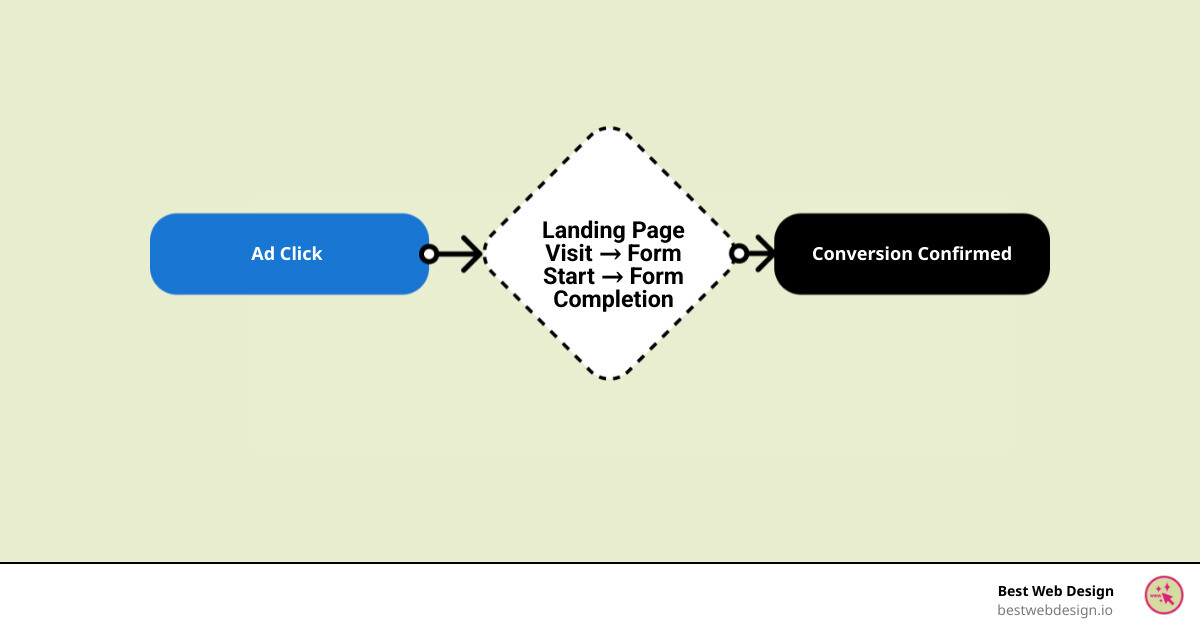
Conversion based optimization flips this model. Instead of chasing clicks, it tracks and optimizes for the actions that actually matter to your bottom line. The system recognizes when someone completes a purchase, fills out a form, or calls your business—then automatically shifts budget toward the keywords and ads that drove those valuable actions.
The impact can be dramatic. Even a small improvement in conversion rate—say, from 3% to 3.5%—can boost revenue by nearly 17% without spending another dollar on advertising. That’s the power of optimizing for conversions instead of just clicks.
I’m Mo Aguilar, and over two decades of building conversion-focused websites and campaigns, I’ve seen how conversion based optimization transforms struggling marketing efforts into profit engines. Whether working with startups in LA or established brands across the country, the principle remains the same: measure what matters, optimize relentlessly, and let data—not assumptions—drive your budget.
What is Conversion-Based Optimization and Why Does It Matter?
At its heart, conversion based optimization in SEM is a strategy that automatically allocates our budget to the keywords and text ads that drive the most valuable actions for our clients. This isn’t just about getting eyeballs on an ad; it’s about ensuring every dollar spent moves us closer to a tangible business goal. We’re talking about maximizing ad spend for the best possible return.
Traditional SEM approaches often get caught up in vanity metrics like click-through rate (CTR) and cost-per-click (CPC). While these metrics have their place, they don’t tell the full story. A high CTR might look good on paper, but if those clicks aren’t leading to sales or leads, we’re essentially experiencing wasted ad spend. It’s like having a busy storefront but no one buying anything inside.
Conversion based optimization shifts this focus entirely. We measure success by the actual conversion rate—the percentage of visitors who complete a desired action—and the return on investment (ROI) generated. For most websites, the average conversion rate typically hovers between 2-5%. Our goal is to push these numbers higher, because even small gains can have a monumental impact. As marketing experts Khalid Saleh and Ayat Shukairy explain in their work, conversion optimization is both “the art and science of converting prospects to customers,” highlighting the strategic and analytical depth required to truly excel.
This approach is crucial for proving the tangible value of SEM to advertisers. When we can directly link ad spend to completed sales, qualified leads, or booked appointments, the conversation changes from “how much did we spend?” to “how much did we make?” This transparency and accountability build trust and demonstrate concrete results, making SEM an undeniable asset rather than a mysterious expense.
From Impressions to Impact: The Core Difference
The fundamental difference between conversion based optimization and traditional SEM lies in its focus: traditional SEM often begins and ends with impressions and clicks, aiming to get as much traffic as possible. Conversion based optimization, however, is solely focused on actions. It’s a strategic pivot from simply attracting visitors to actively guiding them towards valuable outcomes.
This means we’re constantly striving to maximize budget efficiency. Instead of blindly bidding on keywords, we analyze user intent behind each search query. Are they merely browsing, or are they ready to buy? By understanding this intent, we can tailor our ads and landing pages to capture high-potential prospects. This leads to better lead generation, more direct sales, and increased sign-ups.
For local businesses, especially in busy areas like Los Angeles, San Diego, Miami, or Las Vegas, call tracking becomes an invaluable part of this data feedback loop. When a user clicks a “call now” button from an SEM ad, it’s a clear signal of high intent. This action is immediately recognized as a conversion, and the system learns to prioritize similar ad placements and keywords. This continuous learning process ensures our campaigns are always evolving, directing resources to what truly works. The evolution of conversion rate optimization itself, born from the e-commerce boom and the need for marketers to improve website performance, underscores this shift towards actionable results. We’re not just optimizing for traffic; we’re optimizing for impact.
The Financial Benefits of a Conversion Focus
The financial advantages of a conversion based optimization strategy are compelling, making it a cornerstone of smart digital marketing. When we focus on conversions, we’re not just spending money; we’re investing it where it yields the highest returns.

Imagine this: a small bump to your conversion rate can have a serious long-term impact on your bottom line. Say you have a conversion rate of 3% that yields $100k per month. If we boost that to just 3.5%—a mere half-percentage point increase—that will yield an additional $16.7k, or a revenue boost of nearly 17% on an ongoing basis. This significant increase comes without needing to spend an extra dollar on advertising or drive more traffic. It’s about getting more value from the traffic you already have.
This approach directly contributes to a better return on ad spend (ROAS) by reducing customer acquisition costs (CAC). Instead of paying for clicks that go nowhere, we’re paying for actions that lead to paying customers. This efficiency means we make better use of the money spent on marketing and advertising, maximizing our ROI. Over time, this leads to increased customer lifetime value (LTV) and fosters sustainable growth for businesses of all sizes, from local shops in San Diego to growing enterprises in Miami.
By constantly refining our campaigns to attract and convert more valuable customers, we transform SEM from a cost center into a profit driver. This is the power of focusing on conversions: it’s not just about spending less, it’s about earning more from every dollar invested.
The Core Pillars of a Conversion Based Optimization Strategy
A successful conversion based optimization strategy isn’t a one-off fix; it’s a continuous process built upon a few critical pillars. These pillars guide our efforts, ensuring we’re always collecting data, forming hypotheses, testing changes, and iterating for continuous improvement throughout the entire user journey.

Think of it as building a robust house: you need strong foundations (tracking), a clear plan for reaching your goals (targeting), and constant quality checks (testing). When these elements work together, we create a powerful engine for growth.
Pillar 1: Defining and Tracking High-Value Conversions
The first, and arguably most crucial, pillar of conversion based optimization is clearly defining and carefully tracking what constitutes a “conversion.” Not all conversions are created equal, and understanding the difference between macro-conversions and micro-conversions is key.
Macro-conversions are the ultimate goals: a completed purchase, a signed contract, or a major service booking. Micro-conversions, however, are the smaller, incremental steps a user takes on the path to that macro-conversion. These could include form submissions (like signing up for our Special Offer), downloading a brochure, viewing a key product page, or spending a certain amount of time on a service page. By tracking these smaller actions, we gain insights into user behavior and identify potential drop-off points in the funnel.
For local businesses, especially those serving communities in Las Vegas or Los Angeles, calls are a particularly significant conversion signal in SEM. Why? Because 88% of searches for local businesses result in a call or a visit. When someone is searching for a “plumber near me” or “best restaurant in San Diego” and sees a click-to-call ad, that phone call often signifies immediate intent and a high likelihood of becoming a customer. This makes call tracking an indispensable part of our strategy. Setting up robust call tracking allows us to attribute these valuable phone calls directly back to our SEM campaigns, proving their worth. Don’t hesitate to Contact Us to learn more about setting up effective call tracking for your business.
Pillar 2: The Role of Keywords and Ad Copy in Conversion-Based Optimization
In conversion based optimization, keywords and ad copy are far more than just ways to appear in search results; they are critical tools for attracting high-intent users and setting clear expectations.
We focus on long-tail keywords and high-intent keywords—phrases that indicate a user is further along in their buying journey. For example, instead of just “web design,” we might target “web design agency San Diego with UI/UX expertise.” These specific queries signal a clearer need and often lead to higher conversion rates.
Ad copy plays a pivotal role in “message matching.” This means repeating the copy or phrasing from your ad (or the user’s search query) directly on the landing page. If your ad promises “Fast & Reliable HVAC Repair in Miami,” your landing page should immediately confirm that promise. This continuity reassures the user they’ve landed in the right place, reducing confusion and increasing trust. We use dynamic ad copy to achieve this at scale, ensuring ad relevance for every search.
Crafting compelling headlines and a clear value proposition in our ads is also essential. These elements should succinctly communicate what you offer and why it matters, enticing users to click with purpose. And when it comes to calls-to-action (CTAs), we’re always testing. Fun fact: rounded CTA buttons receive anywhere from 17% to 55% more clicks than buttons with sharp angles! For inspiration, you can explore a comprehensive list of powerful call-to-action phrases to make your ads and landing pages irresistible.
Pillar 3: Mastering the Landing Page Experience for Conversion-Based Optimization
Your landing page is where the magic (or misery) of conversion happens. In conversion based optimization, a high-performing landing page isn’t just about looking good; it’s about guiding the user effortlessly toward a conversion.
Several factors are crucial here:
- Page Speed: We live in an instant gratification world. “Conversion rate improves by 17% for every second a website loads faster.” Conversely, a load time of even one second can reduce your conversion rate by 7%. Our team ensures your pages load lightning-fast, especially important for mobile users in busy urban areas.
- Mobile Experience: This is non-negotiable. “Mobile devices accounted for almost 60% of web page views worldwide in January 2024.” Your landing page must be flawlessly optimized for mobile, with easy navigation and clear CTAs.
- Attention Ratio: This refers to the ratio between the number of goals and the number of links on a page. “The lower the attention ratio, the higher the conversion rate.” We design landing pages with a single, clear purpose, minimizing distractions.
- Clear CTAs: Your call-to-action should be unambiguous, prominent, and compelling. Users shouldn’t have to search for what to do next.
- Trust Signals & Social Proof: In an age where online skepticism is high, building trust is paramount. We incorporate elements like customer testimonials, reviews (80% of consumers will typically read five or more reviews before committing to a purchase), client logos, and security badges. “Nearly 90% of consumers trust word-of-mouth recommendations,” and we leverage this by showcasing what others say about your business. “81% of customers prefer companies that offer a personalized experience,” so tailoring content can further boost trust and relevance.
For a deeper dive into crafting pages that convert, consider exploring resources like Landing Page Optimization: The Definitive Guide. At Best Web Design, we pride ourselves on creating these high-converting experiences. Learn more about About Us.
Measuring Success and Proving ROI
Measuring success in conversion based optimization goes far beyond counting clicks. It’s about carefully tracking Key Performance Indicators (KPIs) that directly correlate with business growth. We use advanced analytics tools and rigorous data analysis to provide transparent reporting to our advertisers, demonstrating value that truly matters.
This isn’t just about showing a client a dashboard full of green numbers; it’s about translating those numbers into tangible business outcomes. We’re proving SEM value by showing how it contributes to increased revenue, qualified leads, and a healthier bottom line.
Key Metrics That Truly Matter
When we talk about conversion based optimization, the metrics we track are fundamentally different from traditional click-based campaigns. Here’s a comparison of what truly matters:
| Metric Category | Click-Based Campaigns | Conversion-Based Campaigns |
|---|---|---|
| Primary Focus | Click-Through Rate (CTR) | Conversion Rate |
| Cost Metric | Cost-Per-Click (CPC) | Cost Per Acquisition (CPA) / Cost Per Lead (CPL) |
| Value Metric | Impressions, Clicks | Conversion Value, Revenue |
| Efficiency Metric | Ad Position, Quality Score | Return on Ad Spend (ROAS), Customer Lifetime Value (LTV) |
| Performance Insight | Traffic Volume | Lead Quality, Sales Funnel Analysis |
Our primary focus is the Conversion Rate, calculated as (Number of Conversions / Total Number of Visitors) x 100. As we noted, the average conversion rate is 2–5%, but we always aim higher. Beyond the raw number, we dig into Conversion Value, which assigns a monetary amount to each conversion, allowing us to see the true revenue generated. We also carefully analyze Lead Quality, ensuring that the conversions we’re driving are genuinely valuable prospects for your business. Funnel analysis helps us understand where users are dropping off and where we can optimize further to improve the entire customer journey. These are the metrics that paint a clear picture of ROI.
A/B Testing and Continuous Improvement
At the heart of measuring success and driving continuous improvement in conversion based optimization is A/B testing. This isn’t just a fancy term; it’s a scientific method we employ to ensure every change we make is data-backed and effective.
A/B tests “consist of a randomized experiment with two variants, A and B. It includes the application of statistical hypothesis testing… to compare two versions of a single variable.” For example, we might test two different headlines on a landing page, two variations of a call-to-action button, or even subtle changes in ad copy. We split our audience, show half one version (the “control”), and the other half a different version (the “variant”), then measure which performs better.
The key is achieving statistical significance, meaning the results aren’t just due to chance. This iterative process allows us to learn from each experiment. Even if a test doesn’t yield a “winner,” it provides valuable insights into what doesn’t work for your audience. Interestingly, “only 12% of experiments run actually produce a winning result,” but every experiment is a learning opportunity. Over time, these marginal gains add up significantly. For instance, “a website that improves its conversion rate by 1% per week could see its landing page performance improve by 4.76% after three years.” This compounding effect underscores the power of consistent A/B testing.
To truly master this, we rely on principles outlined in resources like Experiment!: Website conversion rate optimization. Want to dig deeper into optimization techniques and stay ahead of the curve? Find More tips on our Blog.
Common Challenges and How to Overcome Them
Implementing conversion based optimization isn’t always a walk in the park. We often encounter challenges such as insufficient data volume, inaccurate tracking setup, complexities in budget allocation, the need for patience while awaiting results, and the crucial task of aligning sales and marketing teams. But for every challenge, we have a strategic solution.
Challenge: “My campaign isn’t getting enough conversions to optimize.”
This is a common concern, especially for new campaigns or businesses with long sales cycles. If your campaign isn’t generating enough macro-conversions (e.g., sales) to provide statistically significant data for optimization, we don’t throw in the towel.
Solution: We broaden our definition of conversion goals. Instead of waiting for the final sale, we start by optimizing for higher-funnel actions, or micro-conversions. These could include:
- Newsletter sign-ups
- Content downloads (e.g., a whitepaper or case study)
- Video views (especially product demos)
- Clicks on key internal links (e.g., pricing page, ‘About Us’ page)
- Time spent on important pages
By tracking and optimizing these earlier engagement points, we build a larger data set, allowing the conversion based optimization system to learn and adapt more quickly. Crucially, we ensure our tracking is correctly set up from the start, leaving no conversion untracked. This might involve refining analytics goals, implementing event tracking, or verifying pixel placements.
Challenge: “How do I balance brand awareness with direct conversions?”
Sometimes, a client might feel that a strict conversion based optimization approach neglects the softer, longer-term goals of brand building. While conversions are our North Star, we understand that brand awareness plays a vital role in the overall customer journey.
Solution: We approach this by segmenting campaigns and leveraging different bidding strategies. For instance:
- Dedicated Brand Awareness Campaigns: We can run separate campaigns specifically designed for brand exposure, using bidding strategies optimized for impressions or video views, rather than direct conversions. These campaigns might target broader audiences or use less direct ad copy.
- Upper-Funnel Attribution: We understand that not every click leads to an immediate conversion, but it might contribute to a future one. We use attribution models that credit various touchpoints throughout the customer journey, assigning value to earlier interactions that build awareness. This helps us see the full picture and justify investment in upper-funnel activities.
- Full Customer Journey Understanding: By mapping out the entire customer journey, we identify where awareness campaigns feed into consideration and, eventually, conversion campaigns. This integrated approach ensures we’re not just chasing the immediate sale but nurturing potential customers through every stage, ultimately leading to more sustainable growth and higher lifetime value.
Conclusion
We’ve explored the transformative power of conversion based optimization in SEM, moving beyond the superficiality of clicks to focus on the tangible actions that fuel business growth. This strategic shift is about maximizing every marketing dollar, ensuring that our efforts translate directly into revenue, qualified leads, and demonstrable ROI for our clients in San Diego, Los Angeles, Miami, Las Vegas, and beyond.
We’ve seen how CBO differs from traditional SEM by prioritizing user actions, not just traffic volume, leading to significantly better financial outcomes. We’ve broken down the core pillars of a successful strategy: carefully defining and tracking high-value conversions (like critical phone calls for local businesses), leveraging keywords and ad copy to attract high-intent users, and mastering the landing page experience with speed, mobile-friendliness, and trust. Finally, we’ve discussed how to measure success with the right metrics and overcome common challenges through strategic planning and continuous iteration.
Conversion based optimization represents a mindset shift—from chasing volume to prioritizing value. It’s about making smarter marketing investments that drive long-term business growth.
Your Partner in Conversion-Focused Growth
At Best Web Design, we specialize in delivering data-driven, conversion-focused digital products and identities that drive user retention and business growth efficiently. Our expertise in UI/UX and brand design ensures that every touchpoint in your customer’s journey is optimized for maximum impact. We’re not just building websites; we’re building engines for your success.
Ready to transform your SEM campaigns from a cost center into a profit machine? Let us help you open up the full potential of your digital presence. Explore our conversion-focused Offerings and find how our data-driven approach can propel your business forward.