
Why Modern Web Solutions Matter More Than Ever
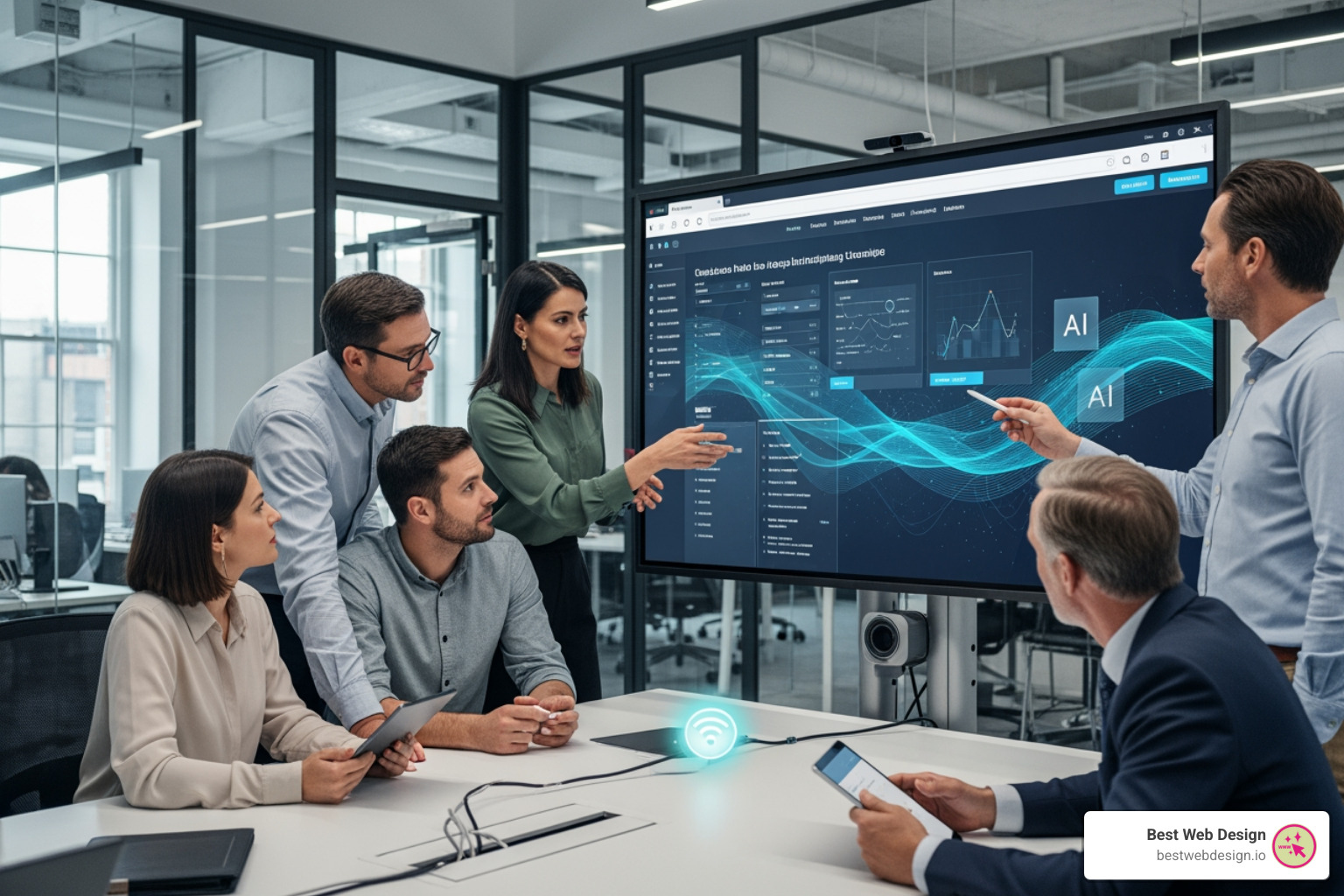
Modern web solutions are comprehensive, standards-based approaches to building websites and web applications that prioritize performance, user experience, accessibility, and business results. Rather than relying on rigid templates or outdated tools, they combine robust engineering with data-driven design to create digital products that actually move the needle for your business.
Here is what sets truly modern solutions apart:
- Built on web standards (HTML5, CSS3, JavaScript) for longevity and maintainability
- Performance-first mindset with optimized load times and Core Web Vitals
- AI-powered capabilities for personalization, automation, and optimization
- Accessible by design, conforming to WCAG standards for all users
- Visual development tools enabling faster deployment and collaboration
- Progressive Web Apps (PWAs) delivering app-like experiences on the web
- Data-driven optimization using analytics and A/B testing for continuous improvement
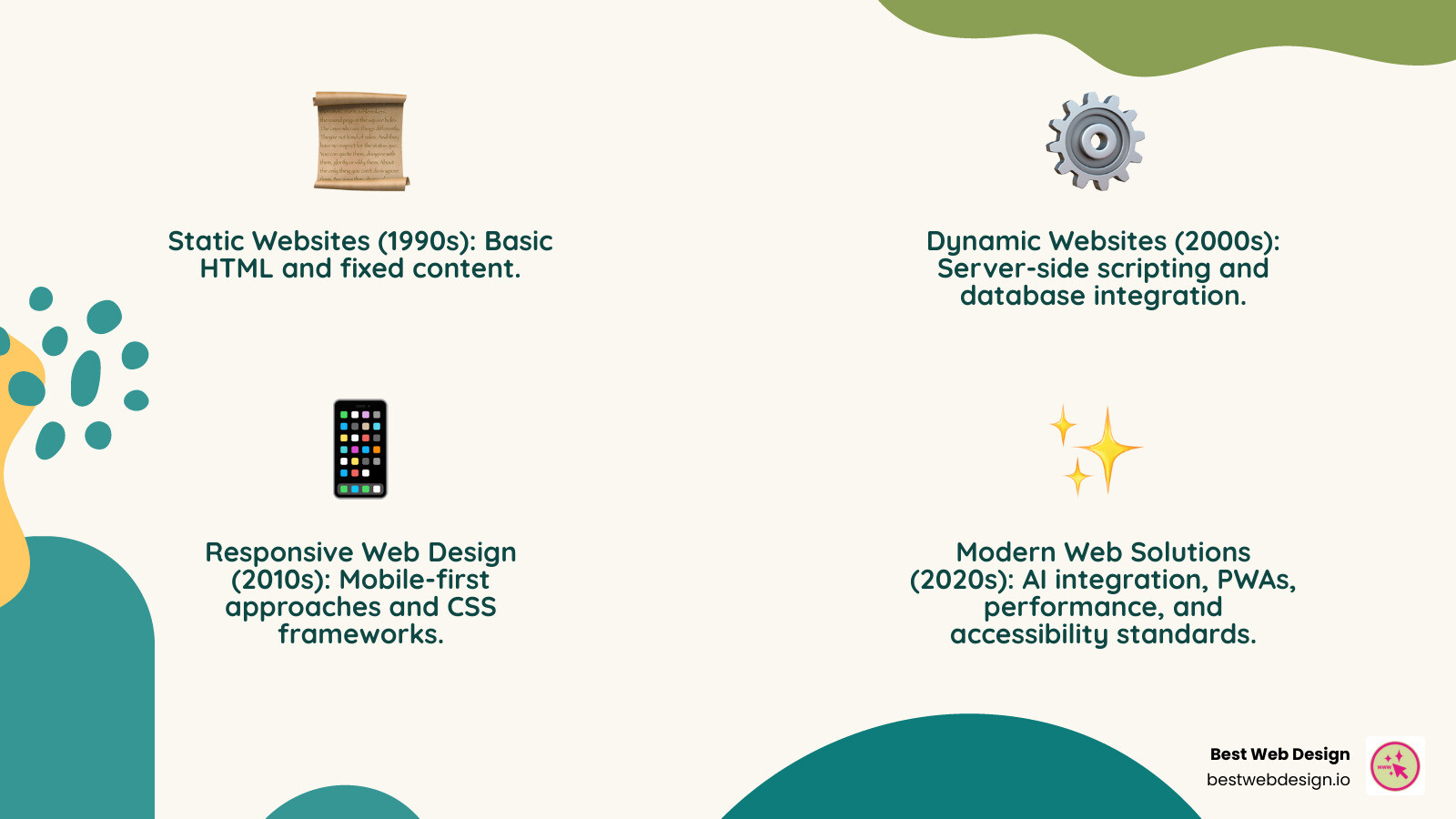
The web has evolved dramatically. Static HTML pages have given way to dynamic, intelligent applications that adapt to user behavior, work offline, and deliver experiences that rival native mobile apps. But this evolution is not just about technology. It is about business outcomes.
Traditional website builders often lock you into templates. Legacy systems create complexity that slows down your team. Meanwhile, your competitors are shipping faster, converting better, and building stronger brands with modern approaches that emphasize speed, flexibility, and user retention.
The difference is clear: businesses using modern web solutions see measurable improvements in organic traffic, conversion rates, and customer engagement. They are building sites that load in under two seconds, work seamlessly across all devices, and adapt to each visitor’s needs in real time.
Modern web solutions are also about bridging the gap between design and development, enabling teams to collaborate efficiently, and giving businesses the tools to iterate quickly without depending on expensive developer resources for every change.
Whether you are struggling with slow site performance, low conversion rates, or a generic digital presence that fails to capture your brand’s uniqueness, modern web solutions offer a path forward. They combine the power of cutting-edge technology with the simplicity of visual interfaces, making sophisticated web experiences accessible to businesses of all sizes.
Over the past two decades, our team at Best Web Design has built hundreds of modern web solutions for startups, entrepreneurs, and established brands across Los Angeles, San Diego, Miami, and Las Vegas. From the early days of hand-coded sites to today’s AI-powered, conversion-optimized platforms, we have helped businesses transform their digital presence using modern web solutions that drive real growth.
The Core Principles of Modern Web Development
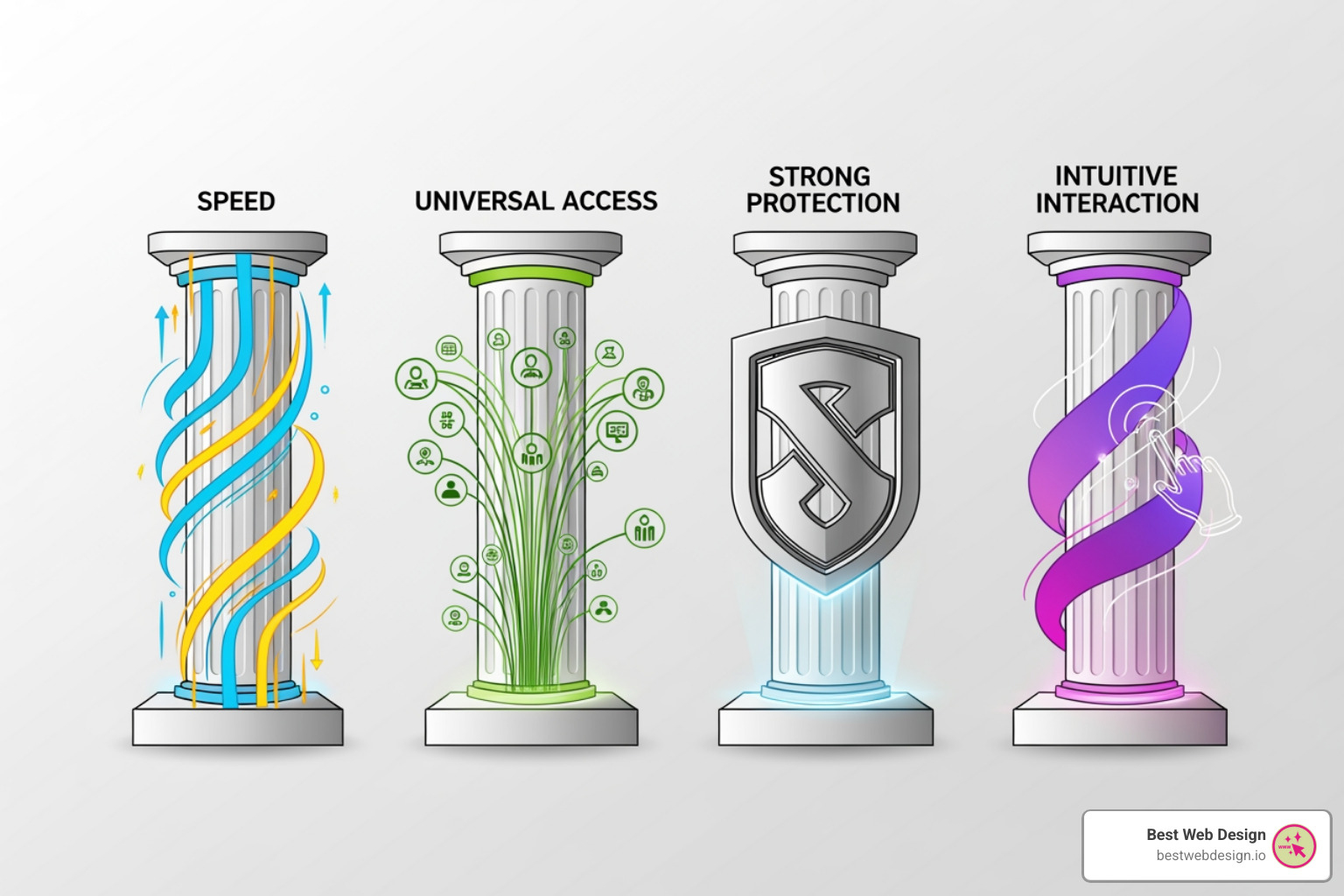
At the heart of every successful modern web solution lies a set of fundamental principles. These are not buzzwords. They are the pillars that ensure a website or application is robust, user friendly, and future proof. When we approach a new project, we always start by grounding our work in these core tenets.
Built on a Foundation of Web Standards
One of the most crucial principles of modern web development is adhering to web standards. This means building with HTML, CSS, and JavaScript, the native languages of the web, and leveraging what modern browsers already offer. Why is this so important?
First, it ensures longevity. When we build on established standards, our code, skills, and knowledge remain relevant for a longer time. We are not chasing fleeting trends or proprietary solutions that might become obsolete next year. Second, it champions browser native features. Modern browsers are powerful platforms, and by working with them rather than against them, we can reduce complex abstractions. This leads to low complexity, making development faster and debugging easier. Our goal is always to create simple solutions that are lightweight and reliable.
For any developer looking to deepen their understanding, the comprehensive resources on Web technology for developers are an invaluable guide to these foundational standards.
Performance and User Experience First
Patience is a virtue few online users possess. This is why modern web solutions are inherently performance first and user experience (UX) first. A slow website is a lost customer.
We focus on critical metrics like Core Web Vitals, which are a set of specific factors that Google considers important for a website’s overall user experience. These include loading performance, interactivity, and visual stability. A recent addition to this suite is Interaction to Next Paint (INP), which measures a page’s responsiveness to user interactions, ensuring a smooth and fluid experience.
Achieving superior performance involves several strategies:
- Responsive design: ensuring our websites look and function well across all devices, from large desktop monitors to the smallest smartphones.
- Fast load times: optimizing images, code, and server responses so that pages load quickly.
- Seamless navigation: designing intuitive pathways that allow users to find what they need effortlessly.
By prioritizing these elements, we create digital experiences that delight users and keep them coming back. You can learn more about our approach to crafting engaging user experiences by visiting More info about our design process.
Accessibility and Inclusivity by Design
A truly modern web solution is not just for some users. It is for all users. Building for accessibility and inclusivity means ensuring that people with disabilities can perceive, understand, steer, and interact with the web effectively. This is not only a moral imperative. It also expands our audience and often improves the user experience for everyone.
We strictly adhere to WCAG (Web Content Accessibility Guidelines) standards, specifically WCAG 2.1 AA. This involves practices like:
- Using semantic HTML to provide meaningful structure to content.
- Implementing ARIA (Accessible Rich Internet Applications) attributes when native HTML elements are not sufficient to convey meaning to assistive technologies.
- Ensuring adequate color contrast in designs so text and graphics are legible for individuals with visual impairments.
- Providing keyboard navigation, text alternatives for non text content, and clear focus indicators.
By embedding inclusivity from the start, we build web experiences that are robust, flexible, and universal.
Security as a Foundational Guardrail
In an age of increasing cyber threats, security is not an afterthought for modern web solutions. It is a foundational guardrail. Security should weave into every aspect of enterprise IT, acting not as a roadblock, but as a safeguard that allows businesses to move faster with confidence.
Our solutions prioritize:
- Protecting user data: implementing robust encryption and data handling practices to safeguard sensitive information.
- Built in security features: leveraging frameworks and platforms that inherently handle common vulnerabilities, such as cross site scripting (XSS) and SQL injection.
- Secure client server communication: utilizing HTTPS and other secure protocols to ensure data integrity and confidentiality during transmission.
- Preventing common vulnerabilities: regular security audits and adherence to best practices to mitigate risks.
The adoption of advanced authentication methods like passkeys makes user accounts safer, simpler, and easier to use, moving us towards a passwordless future. Understanding how your data is handled and protected is paramount, and we encourage reviewing comprehensive policies like the Privacy Policy that govern online interactions.
How Modern Web Solutions Drive Efficiency and Collaboration
The days of siloed teams and clunky development processes are over. Modern web solutions are designed to accelerate development cycles and foster seamless collaboration, ensuring that projects move from concept to launch with speed and clarity.

Accelerating Development with Unified Stacks and Frameworks
One key advancement enabling faster development is the rise of unified technology stacks and powerful frameworks. Imagine building a complex web application in a consistent environment, from backend logic to the user interface. A unified stack delivers exactly that.
Such approaches dramatically reduce context switching for developers, as they do not have to constantly jump between different languages, tools, and paradigms. This leads to increased efficiency and fewer errors.
Benefits of a component based, unified approach include:
- Reduced context switching: developers stay within a familiar environment.
- Reusable components: building blocks can be created once and deployed across multiple parts of an application, or even different projects.
- Built in security features: modern frameworks handle many common vulnerabilities automatically.
- Real time communication capabilities: live updates allow for dynamic, interactive user experiences.
- Improved testability: frameworks make it easier to write and run comprehensive tests.
Another critical aspect of accelerating development is cross browser and cross platform compatibility. Tools like Playwright support all modern rendering engines, including Chromium, WebKit, and Firefox, and can be used on Windows, Linux, and macOS. This allows teams to verify that applications perform consistently everywhere, often with headless testing for efficiency in CI/CD pipelines. The availability of multi language APIs (TypeScript, JavaScript, Python, .NET, and Java) further broadens what can be achieved.
These advancements allow modern agencies like Best Web Design to ship business applications faster, with built in security and enterprise grade UI components, often supported by long term maintenance programs.
Bridging the Gap Between Designers and Developers
Historically, there was a gap between design and development teams. Designers would create detailed mockups, and developers would then try to translate them into functional code, which often led to discrepancies and rework. Modern web solutions actively bridge this gap and create true collaboration.
The key to this synergy lies in:
- Design systems: collections of reusable components, guided by clear standards, that ensure consistency across all digital products.
- Seamless workflows: tools that integrate design and development. For example, a high fidelity Figma library makes it easy to create mockups and prototypes of UIs that are directly translatable into code.
- Prototyping: rapidly creating interactive models of applications so teams can test ideas, gather feedback, and iterate quickly before writing extensive code.
- Version control: collaborative platforms that allow teams to track changes, manage different versions of designs and code, and resolve conflicts efficiently.
By enabling designers to build visually while generating clean, semantic code, and providing developers with clear, component based structures, teams can work together more effectively. This collaborative approach is a cornerstone of our work at Best Web Design, as highlighted in Our UI prototyping tools and libraries.
The Power of Open-Source and Community-Driven Tools
The open source movement has profoundly shaped modern web solutions, providing flexibility, fostering rapid innovation, and offering robust community support.
The core of many powerful web development products is licensed under permissive terms like the Apache 2.0 license, making them freely available for use, modification, and distribution. This freedom eliminates vendor lock in, giving businesses greater control over their technology stack and reducing reliance on a single provider. We can access the Source code for many components, allowing for transparency and customization.
Open source projects thrive on community contributions, so they are constantly evolving, improving, and adapting to new challenges and technologies. This collaborative spirit ensures that the tools we use are current and well supported. Developers can even contribute to projects themselves, for example, on platforms like Open Collective.
At Best Web Design, we accept this philosophy, leveraging open source tools to build adaptable and scalable solutions for our clients, a commitment reflected in Our approach to open-source and community-driven development.
The Rise of Intelligent and Accessible Modern Web Solutions
The web is no longer just a collection of static pages. It is an intelligent, adaptive, and increasingly intuitive ecosystem. Emerging trends are pushing the boundaries of what is possible, with AI integration and visual development tools leading the shift toward more dynamic and accessible experiences.
The Transformative Role of AI in Web Development
Artificial Intelligence (AI) is rapidly changing how we design, develop, and optimize modern web solutions. It affects everything from coding speed to personalization.
Here are a few ways AI is making a tangible impact:
- AI assisted coding: tools that integrate visual editing with AI assistance help developers write code faster and more accurately.
- Generative design: AI can generate layout options, design compositions, CSS animations, and scripts.
- AI driven optimization (AEO): AI helps optimize content for emerging search behaviors and assists with advanced analytics.
- Content personalization: AI can analyze user behavior and preferences to deliver custom content and product recommendations.
- AI powered analytics: AI helps identify patterns and opportunities in large data sets, leading to more effective strategies.
The integration of AI is not just about automation. It makes web development more intelligent, efficient, and capable of delivering unique digital products that align with business goals.
Empowering Teams with Visual Development Tools
For a long time, building sophisticated websites required deep coding knowledge. Modern web solutions have changed this through powerful visual development tools, often referred to as low code or no code platforms. These tools allow a broader range of team members, from designers and marketers to business owners, to contribute directly to the web development process.
These platforms excel at:
- Streamlining workflows: visual manipulation of elements reduces the need for constant back and forth between designers and developers.
- Rapid prototyping: ideas can be brought to life quickly using drag and drop interfaces and pre built components.
- Visual interfaces: users can design and build complex layouts, add interactive elements, and integrate data sources without writing code.
- Drag and drop components: intuitive interfaces allow users to assemble pages and applications from a library of ready made elements.
Platforms like Webflow generate clean, semantic code (HTML5, CSS3, and JavaScript) as you design visually. This approach allows teams to build strong brand experiences, manage content visually, and optimize for conversion with AI support. Learn more about our visual development capabilities at More info about our visual development offerings.
Building Future-Ready Progressive Web Apps (PWAs)
The line between native mobile applications and websites has blurred, thanks to Progressive Web Apps (PWAs). These are a cornerstone of modern web solutions, offering an app like experience directly in the browser, without requiring an app store download.
PWAs provide:
- App like experiences: fast, responsive interfaces that feel similar to native applications.
- Offline capabilities: service workers that cache data so users can continue browsing content without an internet connection.
- Push notifications: the ability to send timely and relevant updates to users.
- Installable experiences: users can add a PWA directly to their device’s home screen via Web App Manifests.
The Project Fugu API showcase on the Chrome Developers site demonstrates the expanding capabilities of the web platform, allowing PWAs to access more device features and deliver richer experiences. Exploring the Project Fugu API showcase offers a glimpse into what web applications can achieve.
These features make PWAs a powerful tool for businesses looking to improve user engagement, reduce friction in the customer journey, and broaden their reach without the cost and complexity of separate native apps. Learn how we can leverage PWAs for your business through Our PWA solutions and case studies.
Leveraging Modern Solutions for Digital Change and Business Growth
The adoption of modern web solutions is about more than technology. It is about driving tangible business impact, fostering digital change, and achieving sustainable growth. For businesses in Los Angeles, San Diego, Miami, and Las Vegas, staying competitive means embracing these advancements to stand out in a crowded digital landscape.
Creating a High-Performing Online Presence
In today’s digital first world, your website is often the first impression a potential customer has of your business. A high performing online presence built with modern web solutions can function as a 24/7 lead machine.
Consider this: businesses with a well executed website can reach more customers than those without a strong online presence. A large percentage of consumers begin their search online before making purchasing decisions, including home buyers who research properties before contacting a real estate agent. If your business is not easily found and does not offer a compelling online experience, you are missing out.
Our focus is on:
- Improved SEO: clean code, fast loading times, and mobile first responsiveness that support better search engine rankings.
- Conversion Rate Optimization (CRO): intuitive user interfaces, clear calls to action, and optimized content pathways that turn visitors into leads and customers.
- Always on lead generation: a well designed, high performing website that works around the clock, generating inquiries and sales.
- Brand authority: a professional, modern website that establishes credibility and positions your brand as a leader in your industry.
To keep up with the latest strategies for a high performing online presence, we invite you to Read our latest insights on our Blog.
Driving User Retention with Superior UX
Exceptional UX and UI design are central to digital success. It is not just about aesthetics. It is about creating intuitive and engaging experiences that keep users coming back. Our expertise lies in delivering data-driven, conversion-focused digital products that drive user retention and business growth.
When we focus on superior user experience, we aim to:
- Provide intuitive interfaces: websites and applications that are easy to understand and steer.
- Create engaging experiences: interactive elements, smooth animations, and personalized content that make interactions memorable.
- Build brand loyalty: consistent, positive experiences that foster trust and encourage repeat visits and purchases.
- Reduce friction: streamlined sign ups, checkouts, and content access that minimize frustration and improve completion rates.
By deeply understanding user behavior and leveraging data, we design modern web solutions that attract visitors and convert them into loyal customers.
Achieving True Digital Change
Digital change is a journey, not a one time project. Modern web solutions are the vehicles that accelerate this journey, helping businesses adapt, innovate, and thrive in a changing digital landscape. Many organizations find themselves stuck due to legacy system complexity. We help overcome these roadblocks.
Key aspects of achieving true digital change include:
- Workflow automation: applying automation frameworks throughout your technology stack to maximize efficiency and reduce friction.
- Infrastructure modernization: integrating modern hosting, content delivery networks (CDNs), and deployment pipelines so your backbone can support future growth.
- Scaling operations efficiently: solutions that offer robust, managed hosting with high uptime and global reach allow businesses to grow without being slowed by technical debt.
- Gaining a competitive edge: adopting advanced capabilities to achieve faster project timelines, increase speed to market, and outperform competitors who rely on outdated methods.
By leveraging modern web solutions, businesses can focus their marketing and product budgets on customer experience and strategic growth instead of being bogged down by technical complexities.
Frequently Asked Questions about Modern Web Solutions
What truly defines a “modern” web solution?
A modern web solution is defined by its core principles. It is built on current web standards, prioritizes performance and security, is accessible to all users, and provides an excellent user experience. It is not just about a contemporary look. It is about being fast, efficient, and scalable. It leverages the latest browser capabilities, accepts responsive design for all devices, and often integrates intelligent features like AI for personalization and optimization.
Do I need to be a coder to build a modern website?
Not necessarily. With the rise of powerful visual development tools and platforms, business owners and designers can create sophisticated, modern websites using intuitive interfaces, often with minimal or no coding required. These low code or no code solutions allow you to visually design, build, and manage complex web applications, generating clean, semantic code behind the scenes. This empowers creative individuals to be both the designer and the developer, significantly accelerating the path from concept to launch.
How is AI changing modern web development?
AI is changing web development by assisting in everything from code generation and debugging to creating personalized user experiences and optimizing content for search engines. It can help generate design compositions, write CSS animations, suggest code snippets, and analyze user behavior to tailor content in real time. This accelerates development cycles and enables more intelligent, data driven web solutions that are more engaging and effective for users.
Conclusion
The journey through the landscape of modern web solutions reveals a clear path forward for businesses seeking to thrive in a connected world. We have seen how adherence to core principles like web standards, performance, accessibility, and robust security forms the bedrock of any successful digital presence. We have explored how unified technology stacks, collaborative tools, and the power of open source projects accelerate development and foster innovation. We have also looked at the transformative potential of AI and visual development platforms, which are making web experiences more intelligent, efficient, and accessible than ever before.
The future of the web is intelligent, user centric, and deeply integrated into everyday business operations. Embracing modern web solutions is no longer a luxury. It is essential for survival and growth. These solutions empower businesses to build high performing online presences, drive user retention through superior UX, and achieve digital change that yields measurable results.
At Best Web Design, we specialize in creating data driven digital products and identities that not only look polished but also drive user retention and business growth efficiently. Our expertise in UI/UX, brand design, Webflow, and no code solutions ensures that our clients in Los Angeles, San Diego, Miami, and Las Vegas stay at the forefront of digital innovation.